 English
 العربية
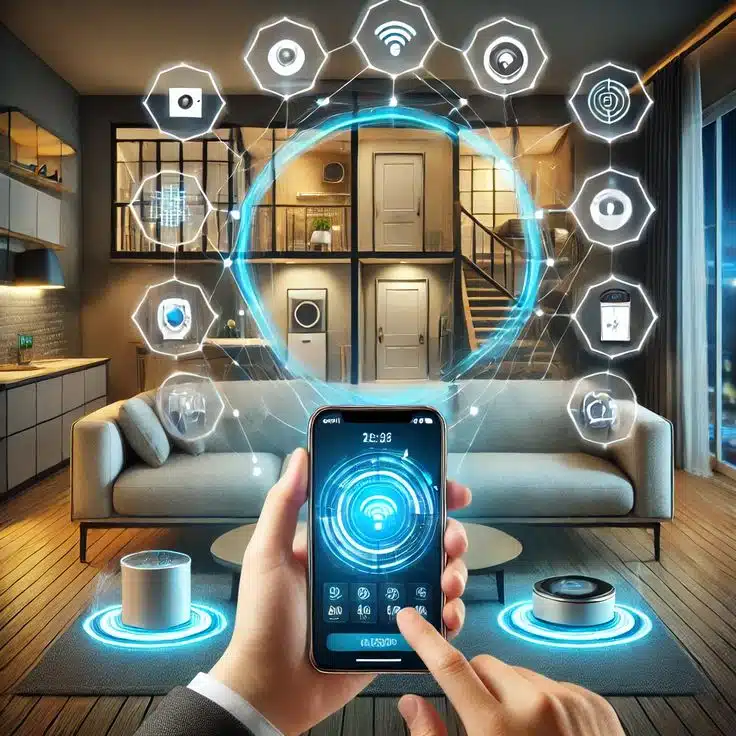
Explore the world of electronic lighting, from revolutionary LED technology to smart lighting systems. Learn how modern technology can transform your home into a more efficient, comfortable, and beautiful space.
Throughout the ages, light has been an essential companion to humanity, evolving with our civilizations. From the first glow of fire, to the flame of a candle, then the revolution of the incandescent bulb that lit up the world’s cities, the role of lighting remained primarily functional: to dispel darkness. But today, we are on the cusp of a new era, an age where light is not just a passive tool controlled by a simple switch, but an intelligent, connected, and responsive entity. This is the era of Electronic Lighting, and it is not just an evolution, but a comprehensive technological revolution that is redefining our relationship with light and opening up possibilities we never dreamed of.

The term “electronic lighting” dives deeper than just replacing an old bulb with a new one. It refers to the radical shift towards semiconductor-based light sources, spearheaded by the Light Emitting Diode (LED), and the digital nervous systems that control them, represented by smart lighting and the Internet of Things (IoT). In this detailed article, we will embark on a journey to explore this luminous world, from the atom to the cloud, to understand how this technology works, what its amazing benefits are, and how you can be part of this bright transformation.
Chapter 1: The Quantum Leap from Traditional to Electronic
To understand the scale of the revolution, we must remember the recent past. For decades, two technologies dominated the world of lighting: incandescent and fluorescent bulbs. The former worked by heating a thin filament of tungsten until it glowed, a process that wasted over 90% of energy as heat, not light. The latter was more efficient but contained toxic mercury, suffered from annoying flicker, and offered dull color quality. Control over both was extremely limited, confined to on/off, or at best, rough analog dimming.
Then came the defining moment with the maturation of LED technology. An LED is not just a lamp; it’s a precise electronic device. Simply put, when an electric current passes through a small chip of semiconductor material, the electrons release their energy in the form of photons, which are particles of light. This process, known as electroluminescence, is the heart of electronic lighting. It’s a direct, cool, and incredibly efficient process. This shift from “heating” to “electron” is what opened the door to a whole new era of possibilities.

Chapter 2: The LED – The Beating Heart of Electronic Lighting
LED technology is the cornerstone of modern lighting, and its advantages are not marginal; they are overwhelmingly superior to everything that came before.
1. Incredible Energy Efficiency: This is its most famous feature. Lighting efficiency is measured in “lumens per watt.” While incandescent bulbs offer about 15 lumens/watt, modern LEDs exceed 150 lumens/watt and more. This means they produce the same amount of light for a fraction of the energy, leading to massive savings on electricity bills and a reduced carbon footprint.
2. Legendary Lifespan: The average life of an incandescent bulb is about 1,000 hours. A high-quality LED lamp can last between 25,000 to 50,000 hours. This not only means buying fewer bulbs but also means peace of mind for many years and reduced maintenance costs, especially in commercial and industrial applications.
3. Superior Light Quality and Color Control: Here, the genius of electronics shines. Unlike their predecessors, LEDs can be engineered to produce a wide spectrum of colors and color temperatures (CCT), measured in Kelvin (K):
- Warm White (2700K-3000K): A cozy, yellowish light, perfect for bedrooms and living rooms.
- Neutral White (3500K-4500K): A bright, clean light, great for kitchens and offices.
- Cool White (5000K-6500K): A bluish, daylight-like light, ideal for high-concentration workspaces.
Additionally, there’s the Color Rendering Index (CRI), a measure of how accurately colors appear under a light source. High-quality LEDs have a CRI of over 90, meaning colors look true and natural. Leading brands like Nawartt place this standard at the forefront of their priorities, ensuring that their lighting not only illuminates a space but brings out its true beauty.

4. Limitless Design Flexibility: Because LEDs are so small, they have freed lighting designers from the constraints of bulky traditional bulbs. Light can now be integrated into almost anything: thin strips under cabinets, recessed fixtures in the ceiling, lights built into furniture, and even luminous textiles.
Chapter 3: Smart Lighting – The Brains of the Electronic System
If the LED is the muscle, then smart lighting is the brain. Smart lighting is the product of merging LED technology with wireless communication technologies like Wi-Fi, Bluetooth, Zigbee, and Z-Wave. This integration turns each lamp into a data point on a network (part of the IoT), enabling a level of control and interaction never before possible.
Components of a Smart System:
- Smart Bulbs or Fixtures: Contain built-in wireless chips.
- Hub or Bridge: A central device that connects to your router and coordinates all your lighting devices (necessary for systems like Zigbee).
- Control App: The user interface on your smartphone or tablet.
- Input Devices: Voice commands (via Amazon Alexa, Google Assistant), smart switches, and motion and daylight sensors.
Benefits of Smart Lighting:
- Unparalleled Convenience and Control: Turn off all the lights in the house from your bed, or turn them on from thousands of miles away. You can schedule lights to wake you up gradually in the morning or to turn on automatically at sunset.
- Atmosphere Customization (Scenes): With the touch of a button, you can recall preset lighting settings. A “Movie Scene” might dim the main lights and turn on a colored LED strip behind the TV. A “Focus Scene” might adjust the lighting to a bright, cool white temperature. Solutions like those offered by Nawartt provide easy interfaces to create and customize these scenes to fit every moment of your life.
- Enhanced Security: Smart lighting can simulate your presence at home while you’re away by turning lights on and off at different times, deterring potential burglars.
- Boosted Energy Efficiency: By using sensors and smart dimming, it ensures that light is on only when needed and at the required brightness, adding another layer of savings on top of the baseline efficiency of LEDs.
Chapter 4: Human-Centric Lighting
This is one of the most fascinating and impactful applications of electronic lighting on our health. Human-Centric Lighting is a design approach that uses light to support our natural biological rhythms, known as the Circadian Rhythm.
Our bodies are programmed to respond to the natural light cycle of the sun. Bright blue light in the morning stimulates alertness and stops the production of the sleep hormone (melatonin). As evening approaches, the light becomes warmer and dimmer, allowing our bodies to prepare for sleep. In our modern world, we spend most of our time indoors under static lighting, which disrupts this natural cycle and affects our sleep, mood, and productivity.

This is where tunable white LEDs come in. These smart lights can automatically change their color temperature and brightness throughout the day. Imagine the lighting in your office and home starting with a cool, energizing white in the morning, gradually shifting to a neutral white in the afternoon, and ending with a warm, cozy glow in the evening. This isn’t science fiction; it’s a reality offered by innovative companies like Nawartt, who understand that lighting should serve our health and well-being, not just our visual needs.
Chapter 5: Building Your Electronic Lighting System
Transitioning to smart lighting might seem complex, but it’s actually easier than ever. Here’s a simple roadmap:
- Start Simple: You don’t need to change everything at once. Start with a single room or even a single smart bulb in your reading lamp to experience the benefits.
- Choose Your Ecosystem: Decide whether you’ll commit to a specific platform like Philips Hue or systems that work directly with Wi-Fi and integrate with Google Home or Amazon Alexa.
- Select Your Hardware:
- Smart Bulbs: The easiest way to start. Just replace the old bulb with the new one.
- Smart Switches: A more advanced option that controls the entire lighting circuit, allowing you to use regular bulbs.
- Smart LED Strips: Perfect for accent lighting under cabinets, behind screens, or along stairs. Products like Nawartt LED strips are known for their flexibility and ease of installation.
- Think Integrated Fixtures: For a more professional and seamless look, consider ceiling or wall fixtures that come with smart LED technology built-in. Trusted brands like Nawartt offer a wide range of these solutions that combine elegant design with smart functionality.
- Installation and Setup: Most modern systems are designed to be Plug-and-Play. All you need is to follow the instructions in the app to connect your devices to your network.
Chapter 6: The Luminous Future – What’s Next in Electronic Lighting?
We are still at the beginning of this revolution. The future holds even more exciting innovations:
- Li-Fi (Light Fidelity): A technology that uses the flickering of LED lights, invisible to the human eye, to transmit data at speeds exceeding Wi-Fi. Every light bulb could become an internet access point.
- Deeper Smart Home Integration: Your lighting will communicate seamlessly with your blinds, thermostat, and sound system to create immersive and integrated experiences.
- OLED & MicroLED: These technologies will enable ultra-thin, flexible luminous surfaces, allowing light to be integrated into walls and ceilings in ways unimaginable today.
- Artificial Intelligence and Machine Learning: Lighting systems will learn your habits and preferences and adjust themselves automatically without any intervention from you. Forward-thinking brands like Nawartt are already investing in R&D to be at the forefront of this next wave, transforming light from a tool we interact with to a partner that proactively responds to our needs.
Conclusion
Electronic lighting is much more than just a way to save energy. It is a paradigm shift in how we interact with our built environments. It has transformed light from a static element into a dynamic and powerful tool that can improve our mood, boost our productivity, secure our homes, and add beauty and magic to our daily lives. From the efficiency and durability of LEDs to the intelligence and convenience of connected systems, we are witnessing a true moment of transformation. Light has become a new language, an electronic language that promises a brighter, smarter, and more human-responsive future.
#Keyword_List #ElectronicLighting #SmartLighting #LEDbulbs #LEDtechnology #SmartHome #Nawartt #InternetofThings #IoT #LightingControl #ModernLighting #EnergyEfficiency #HumanCentricLighting #ColorRenderingIndex #ColorTemperature #Zigbee #FutureofLighting


